information marketing is a digital marketing tactic that focuses on producing and disseminating useful information to draw in and interact with a target audience.The goal is to provide useful information that solves problems and answers questions while building trust with potential customers.
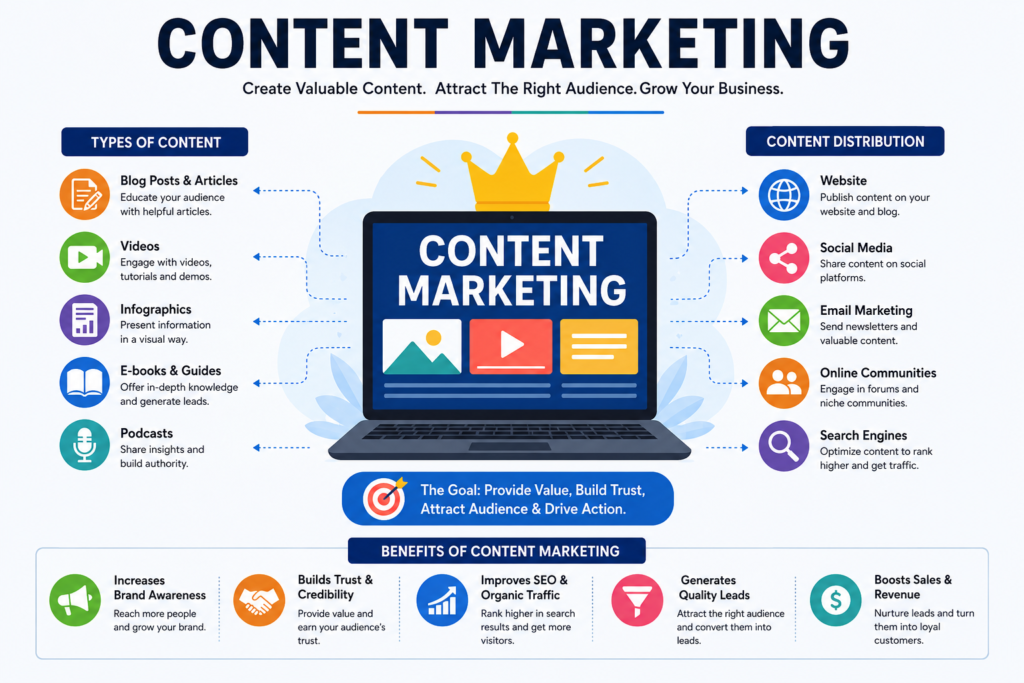
- Blog posts
- Articles
- Videos
- Infographics
- Podcasts
- E-books
- Case studies
- Social media content
- Email newsletters
- Webinars
Instead of pushing customers to buy immediately, content marketing nurtures relationships and guides people through the buying journey.
Why Content Marketing Is Important
Modern consumers research products and services before making purchasing decisions. They read reviews, compare options, watch videos, and seek expert advice online.
Businesses that consistently publish helpful content gain several advantages.
Builds Brand Awareness
Creating high-quality content helps more people discover your business through search engines, social media platforms, and online communities.
Increases Customer Trust
When a company provides valuable information without constantly selling, customers view it as a reliable source of expertise.
Improves Search Engine Rankings
Search engines reward websites that publish useful and relevant content. Well-optimized articles can rank higher in search results and attract organic traffic.
Generates Qualified Leads
Content marketing attracts people actively looking for information related to your products or services, making them more likely to become customers.
Supports Long-Term Growth
Unlike paid advertisements that stop generating traffic when the budget ends, quality content can continue attracting visitors for months or even years.
Types of Content Marketing
Successful content marketing strategies often include multiple content formats.
Blog Posts
Blogging remains one of the most effective content marketing methods. Informative articles help answer customer questions and improve SEO performance.
Video Marketing
Video content is highly engaging and easy to consume. Tutorials, demonstrations, interviews, and educational videos attract large audiences.
Social Media Content
Platforms such as Facebook, Instagram, LinkedIn, and YouTube allow businesses to share content and interact directly with their audience.
Infographics
Infographics simplify complex information using visual elements, making content easier to understand and share.
Email Marketing Content
Email newsletters deliver valuable information directly to subscribers and help maintain long-term customer relationships.
E-books and Guides
Detailed guides provide in-depth information and are often used to generate leads through downloadable resources.
Podcasts
Podcasts allow brands to share knowledge, interviews, and industry insights in an audio format that audiences can consume anywhere.
How to Create an Effective Content Marketing Strategy

A successful content marketing campaign requires planning and consistency.
Understand Your Audience
Before creating content, identify your target audience.
Research factors such as:
- Age
- Interests
- Profession
- Problems they face
- Online behavior
- Buying preferences
Knowing your audience helps create content that addresses their specific needs.
Set Clear Goals
Define what you want to achieve through content marketing.
Common goals include:
- Increasing website traffic
- Generating leads
- Improving brand awareness
- Growing social media engagement
- Increasing sales
Clear objectives make it easier to measure success.
Perform Keyword Research
Keyword research helps identify topics your audience searches for online.
Look for keywords that have:
- Good search volume
- Relevant search intent
- Moderate competition
Targeting the right keywords improves visibility in search engine results.
Create Valuable Content
Always focus on providing value to readers.
High-quality content should be:
- Informative
- Accurate
- Easy to read
- Well-structured
- Relevant
- Original
The best content solves problems and answers questions better than competing resources.

Publish Consistently
Consistency is essential for content marketing success.
Create a content calendar to schedule:
- Blog posts
- Social media updates
- Videos
- Email campaigns
Regular publishing helps build audience trust and improves search engine performance.
SEO and Content Marketing
https://agencies.semrush.com/list/smm/india/
Search Engine Optimization (SEO) and content marketing work together.
SEO helps content become discoverable, while content provides the information users are searching for.
To optimize content:
- Use the focus keyword naturally
- Write compelling titles
- Create informative headings
- Add internal links
- Optimize images
- Write engaging meta descriptions
- Improve page loading speed
Proper SEO practices increase visibility and drive more organic traffic.
Common Content Marketing
Publishing Low-Quality Content
Poorly written content can damage credibility and reduce engagement.
Ignoring SEO
Even great content could have trouble reaching its audience without SEO
Being Too Promotional
Constant sales messages can drive readers away. Focus on providing value first.
Inconsistent Publishing
Irregular posting schedules make it difficult to build audience trust and momentum.
Not Measuring Results
Tracking performance helps identify successful content and areas for improvement.
Measuring Content Marketing Succ
Monitoring performance ensures your strategy remains effective.
Important metrics include:
Website traffic
Organic search visits
Social media engagement
Lead generation
Email subscriptions
Conversion rates
Time spent on pages
Bounce rate
Analyzing these metrics helps refine future content efforts.
The Futurudience engagement.

Content marketing continues to evolve with technology and changing consumer preferences.
Emerging trends include:
Artificial intelligence content tools
Personalized content experiences
Voice search optimization
Interactive content
Short-form video content
User-generated content
Businesses that adapt to these trends can stay competitive and maintain strong audience engagement.
Conclusion
Content marketing is one of the most effective ways to attract customers, build trust, and grow a business online. By creating valuable content that educates and informs, brands can establish authority, improve search engine rankings, generate leads, and increase conversions.
A successful content marketing strategy requires understanding your audience, producing high-quality content, optimizing for SEO, and maintaining consistency. Businesses that invest in content.
No responses yet